


Block Jam: Cookie Master
4.845.00 Reviews
App Specs
- Version
- 2.1.3
- Updated On
- License
- Free
- Downloads
- 100,000+
- Developer
- Playful Bytes
- Categories
- Casual
- Platform
- Android
Screenshots
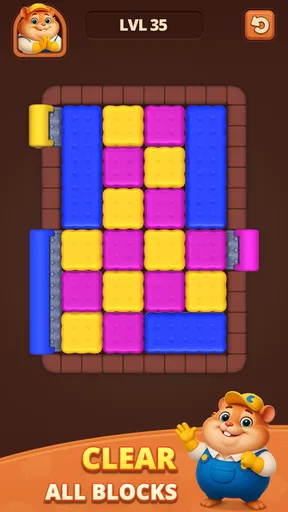
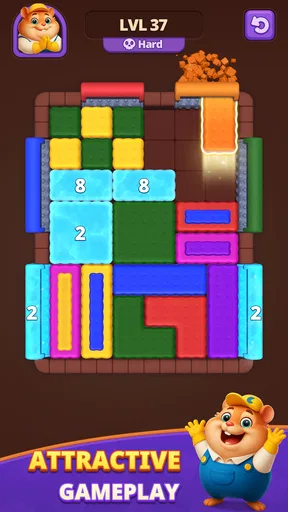
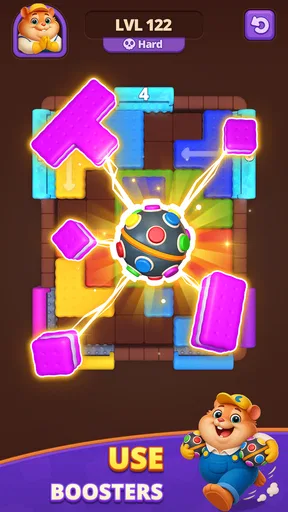
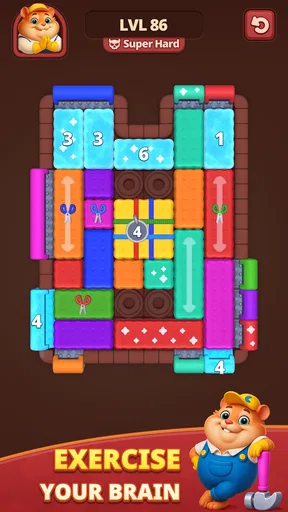
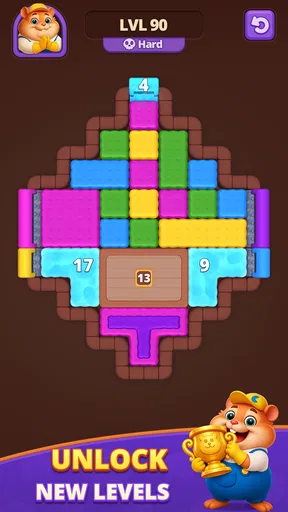
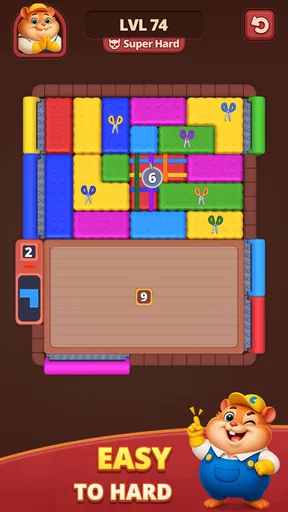
 Analysis by AppCompare
Block Jam: Cookie Master is a casual puzzle game built around one clear idea: moving blocks, bringing matching colors together, and clearing each challenge through careful placement. I found that focused design more appealing than a crowded game that tries to combine puzzles with several unrelated systems. It is easy to understand within a few moments, yet the board can still make me pause before committing to a move.
That simplicity is the game’s main strength. There is no complicated rulebook to study before playing, and the store summary captures the central activity without needing a long explanation. I pick it up when I want a short mental break, but the color-matching objective gives each move enough purpose to stop it feeling like random tapping. The result is a small, approachable experience for people who enjoy visual organization and light problem-solving.
Why the block-moving puzzle matters
The important capability here is not merely matching colors. It is the relationship between movement and space. A block may look ready to pair with another, but moving it can restrict the route for a different color. That makes the game more thoughtful than a simple reflex challenge. I am usually deciding which match to make now and which open area I need to preserve for later.
This has a noticeable effect on how I play. Instead of tapping quickly and hoping the board resolves itself, I scan the arrangement, identify the most constrained pieces, and then work backward from the spaces they need. That small change in approach is where the game earns its appeal. The controls remain casual, but the best results come from planning rather than speed.
For a mobile puzzle, this is a useful balance. The rules are friendly enough for a newcomer, while the board arrangement gives experienced players a reason to be more deliberate. I would not describe it as a deep strategy game, but it does reward visual patience. When I make a poor move, the mistake generally feels understandable: I used a useful space too early, blocked a route, or matched the convenient color instead of the necessary one.
The developer, Playful Bytes, keeps the concept centered on the board itself. That focus helps the game feel approachable for an Everyone-rated audience. A child can understand the color goal, while an adult can treat the same activity as a compact logic exercise. The broad age suitability also makes it a reasonable choice for shared casual play, although younger players may still benefit from learning to look ahead rather than simply moving the nearest block.
What a typical round feels like
In practice, I begin by looking for the colors that have the least room to maneuver. A matching pair that is already easy to reach can often wait. The more valuable first move is usually the one that opens a lane, frees a corner, or prevents two groups from interfering with each other. This is not a special mode or hidden system; it is a practical way to read the board that makes the basic mechanic more satisfying.
Worth Reading Before You Choose

EA SPORTS FC Mobile 26 Is a Bigger Football Game, but It Takes Time

Flipboard Shows What News Apps Must Do Beyond the Feed

Switching to Android Auto Means Rethinking Your Driving Routine

Google Calendar Makes a Crowded Week Easier to Manage

Ludo King Makes the Most of the Minutes Between Plans

Baby Panda World Brings Quick Play to Modern Phones, but Its Game Library Feels Busy
Once I have made an opening, I reassess instead of following a fixed sequence. The board’s available spaces matter more than the original position, so a move that seemed unhelpful at the start can become useful after another color has been cleared. I like this quality because it keeps the puzzle from feeling entirely predetermined from the first glance. The game asks me to adapt without burying me in complicated rules.
My most useful habit is to avoid filling the largest open area too soon. A broad empty section may look like wasted space, but it can be the only practical route for a block trapped behind others. I also try to identify whether a color is acting as a barrier. Clearing that group can change the whole board, while matching an unimportant pair may leave the real obstruction untouched.
Another helpful approach is to treat every move as both progress and commitment. If I move a block into a narrow space, I ask whether it can still leave that area later. This prevents the common mistake of making a match that looks correct but creates a dead end. The game’s casual presentation makes these decisions feel low-pressure, yet they are exactly what separates a smooth solution from a frustrating restart.
That restart friction is worth considering. A player who enjoys experimenting may appreciate being able to test an idea and learn from the result. Someone who dislikes undoing work may find an awkward placement more irritating, especially when the board offers little room to recover. I therefore recommend a slower first pass: inspect the layout, make the move that improves access, and only then start matching aggressively.
A realistic everyday use
The best scenario for me is a short waiting period when I want something more engaging than scrolling but less demanding than a full game session. I can open it during a coffee break, solve a small number of boards, and put it away without needing to remember a story, manage a character, or prepare a long-term strategy. The color-and-block format communicates its purpose immediately, which is valuable when I only have a few spare minutes.
It also works well as a gentle transition between tasks. After concentrating on work or study, I can use the board to shift attention toward a contained problem. The visual goal is clear, and the decisions are small enough that I do not feel I am starting another major commitment. For that reason, I see it as better suited to brief mental resets than to people looking for an all-evening gaming destination.
A parent could also use the game as a simple introduction to spatial reasoning. I would encourage a child to explain why a move is safe before making it, rather than taking over the board and solving everything. That turns the matching activity into a conversation about space, order, and consequences. The Everyone rating supports this kind of accessible use, though the actual enjoyment will still depend on whether the player likes color-based puzzles.
It is less suitable for a commute or situation where interruptions are constant if the player becomes invested in completing a board without breaking concentration. The core task is easy to resume conceptually, but a puzzle still benefits from remembering which spaces were being preserved. I prefer playing when I can give the board a few uninterrupted minutes, even though the game itself is designed for casual use.
Where it beats familiar alternatives
Compared with a match-three game, Block Jam: Cookie Master places more emphasis on arrangement than on rapid combinations. I am not mainly watching for a chain reaction or waiting for a special piece to appear. I am organizing movement routes and deciding when a color should be handled. That makes it a better choice for someone who likes quiet planning and a weaker choice for someone who wants constant visual effects and fast rewards.
Compared with a traditional sliding-block puzzle, the color objective makes the goal easier to read. I do not need to memorize a complex target pattern before starting. The trade-off is that the experience may feel less substantial to players who want a large, evolving puzzle system with many layers of mastery. Its appeal comes from clarity and immediacy, not from a huge collection of mechanics.
It also differs from endless casual games that rely on repeating the same quick action. Here, the board encourages me to pause and inspect. That pause is the real source of value: I am using attention rather than reflexes. Players who enjoy sorting, organizing, and finding a clean route will probably connect with it more quickly than players who measure fun by speed or score chasing.
Because the game is free, it is easy to try without turning the decision into a purchase commitment. I would still judge it by the quality of its moment-to-moment puzzles rather than by the absence of an upfront cost. Free access is useful for discovering whether this particular style of color-and-block reasoning suits you, but it does not change the fact that the game’s replay appeal depends on how much you enjoy solving one board after another.
The trade-offs I noticed
The narrow focus is both the reason I recommend it and the main limitation I would explain to a friend. If you want a casual game that stays centered on one readable puzzle idea, this focus feels refreshing. If you expect several distinct modes, a story, collection systems, or a large variety of activities, the straightforward structure may seem modest.
The game also asks for visual attention in a way that can become tiring during a long session. Matching colors sounds effortless, but carefully tracking open spaces and blocked routes requires concentration. I get more from it in short sessions than by playing continuously. That is not a serious flaw for a pick-up-and-play title, but it does define the audience: this is a compact puzzle break, not a substitute for a deep strategy game.
Color recognition is another practical consideration. Since the central task depends on telling groups apart, the experience may be less comfortable for players who have difficulty distinguishing similar shades. I would not recommend choosing it solely because the rules are simple; the visual clarity of the board has to work for the individual player. People who need strong accessibility options should consider that requirement before settling on this game.
I also would not choose it for someone who needs a highly competitive social experience. The satisfaction comes from solving the arrangement in front of me, not from comparing complicated tactics with other players. Likewise, action-game fans may find the deliberate pace too restrained. The absence of urgency is a benefit when I want to relax, but it can feel like a lack of energy if I am looking for excitement.
Who will get the most from it
The strongest audience is anyone who likes casual puzzles with a visible objective and a little room for planning. It suits players who enjoy asking, “What space will I need next?” rather than simply searching for the fastest available match. It is also a good fit for people who want a game that can be understood quickly and played in short bursts without learning a large set of controls.
It may appeal especially to players who find ordinary matching games too dependent on speed. Here, taking a moment to inspect the board is part of the experience, not a sign that I am playing badly. I can build a repeatable method: identify blocked colors, protect open lanes, clear barriers, and reassess after each meaningful move. That workflow gives the simple mechanic more depth than the brief store wording suggests.
On the other hand, I would steer away from it if your priority is a strong narrative, competitive multiplayer, elaborate progression, or constant novelty. A different casual puzzle may be better if you prefer timed rounds, physics-based surprises, or a large set of changing rules. Block Jam: Cookie Master is at its best when its restraint sounds appealing rather than limiting.
The game has earned an average rating of 4.8 from around eight hundred ratings, and it has passed one hundred thousand installs. Those figures suggest that its accessible puzzle format has found an audience, but my recommendation still comes from the way the mechanic feels in use: clear at the start, more thoughtful after a few moves, and most enjoyable when I treat space as a resource.
Practical details before installing
It is free to install, carries an Everyone content rating, and was released on September 9, 2025. The current version is 2.1.3, and it requires Android 8.0 or later. These details make it a straightforward option for many Android users, particularly anyone with an older compatible device who wants a light puzzle rather than a demanding game.
I would check the operating system requirement before trying it on an older phone, especially if the device has not received updates for some time. For everyone else, the low barrier to entry is part of the appeal: there is no need to understand a genre tradition or commit to a lengthy campaign before finding out whether the block-moving idea works for you.
My final view is positive but specific. I recommend Block Jam: Cookie Master to friends who want a calm, focused color puzzle and enjoy planning around limited space. The best way to play is to protect routes, clear obstructing groups first, and resist the temptation to fill every open area immediately. If that kind of careful organization sounds satisfying, this is a strong casual choice for short, thoughtful sessions. If you need action, social competition, or a broader progression system, I would look elsewhere rather than expecting this compact design to become something it is not.
Pros
- Simple tap-and-match controls are easy for new players to understand.
- Short levels make it convenient to play during quick breaks.
- Colorful cookie-themed visuals give the game a cheerful presentation.
- Gradual difficulty increases help introduce new puzzle mechanics smoothly.
- Offline play is useful when you do not have a stable internet connection.
Cons
- Repeated puzzle patterns can make later sessions feel somewhat predictable.
- Some levels may depend heavily on trial and error rather than planning.
- Limited customization options reduce long-term personalization.
- Frequent reward prompts can interrupt the flow between completed levels.
- Progress may feel slow for players who avoid optional purchases.
FAQs for Block Jam: Cookie Master
What is Block Jam: Cookie Master and how is it played?
Block Jam: Cookie Master is a casual puzzle game built around arranging, matching, or clearing colorful cookie-themed blocks. The main objective is usually to solve each level by making the required combinations within a limited number of moves or under specific board conditions. Its simple controls make it easy to start, while later stages introduce more complicated layouts, obstacles, and goals that require careful planning rather than random tapping.
Is Block Jam: Cookie Master free to download and play?
The game can generally be downloaded and played without an upfront purchase, but it may include optional in-app purchases. These purchases can provide extra lives, boosters, coins, or other helpful items for players who want to progress more quickly. You can normally enjoy the early content for free, although advertisements, limited attempts, or increasingly difficult levels may encourage optional spending as you advance.
Does Block Jam: Cookie Master require an internet connection?
An internet connection may not be necessary for basic puzzle gameplay, which makes Block Jam: Cookie Master suitable for short sessions while traveling or when mobile data is unavailable. However, online access may still be required for advertisements, special events, cloud features, updates, rewards, or purchases. Availability of offline functionality can also vary between Android and iOS versions, so it is worth checking the store listing.
Is Block Jam: Cookie Master suitable for children?
Block Jam: Cookie Master uses bright visuals, simple touch controls, and non-violent puzzle mechanics, making the core gameplay approachable for many children and families. Nevertheless, parents should review the game’s age rating and privacy information before installation. Advertisements and optional purchases may appear, and younger players could accidentally tap a purchase or spend rewards, so parental controls are recommended on the device.
What should I know about difficulty, advertisements, and in-app purchases?
The opening levels are designed to teach the basic mechanics and can usually be completed quickly, but the challenge tends to increase as new block arrangements, limited moves, and special objectives are introduced. Advertisements may appear between levels or when requesting bonus rewards. Boosters and extra attempts can help with difficult stages, although patient players may prefer to progress without spending money by planning moves carefully and using free rewards.


